Top Patient Plastic Surgery FAQs
In order to help our plastic surgery patients achieve their goals, we encourage them to ask all the questions they need at the consultation, to ensure the procedure is a good fit. But at AMAE Plastic Surgery in Birmingham, MI, we often have patients who are unsure what questions to ask in their consultation. Dr. Ali and our expert staff have compiled a list of the top 10 frequently asked questions about plastic surgery to help patients prepare for their consultation appointment.
Here are some of the top most commonly asked plastic surgery questions, compiled by the experts at AMAE Plastic in Birmingham, MI.
Is plastic surgery covered by insurance?
In the vast majority of cases, plastic surgery is elective – rather than medically necessary – so insurance typically does not cover it. In some limited cases, however, insurance may cover plastic surgery for reconstructive purposes. Examples of insurance coverage for plastic surgery may be cases of medical necessity (e.g. eyelid surgery for obscured vision); or reconstruction after a patient has been injured in an accident or had a mastectomy due to breast cancer.
Who makes a good candidate for plastic surgery?
Patient who are in overall good health, do not have a history of smoking, and are not overweight are typically the ideal candidates for plastic surgery. Any patient who has a pre-existing condition such as high blood pressure, heart disease, or diabetes would not be considered a good candidate for plastic surgery – and need to speak to their primary physician to address their underlying health conditions. Patients who are ideal candidates for plastic surgery also keep expectations realistic. These patients are also forthcoming about past medical history, goals, and concerns. This level of transparency and detail helps the plastic surgeon and patient to have a positive plastic surgery experience.
Is plastic surgery risky?
Risk is associated with all surgical procedures. However, patients can rest assured that Board Certified plastic surgeon Dr. Ali is highly trained and exceptionally experienced – reducing the risk of side-effects or complications. Additionally, patient compliance with pre and post operative instructions is critical to ensure a safe outcome, avoid complications and ensure a rapid and positive recovery process.
At what age should I have plastic surgery?
There is no specific age that is the “correct” age for plastic surgery. Board certified plastic surgeon Dr. Ali has performed plastic surgery procedures on patients from infancy to people in their eighties. He has repaired cleft pallets on small children, performed nose jobs on teens to help them with self esteem, done eyelifts (blepharoplasty) on patients in their 80s – and everything in between.
There are some trends that are more common among younger patients, such as breast procedures, liposuction, and nose jobs. And more mature patients may be more likely to pursue facial procedures such as brow lifts, neck lifts, face lifts, or eyelid procedures. During consultation, Dr. Ali, the board certified plastic surgeon at AMAE Plastic Surgery in Birmingham, MI will ask questions relevant to your specific care, such as age, body type, and overall health status prior to moving forward with your plastic surgery.
Is board certification required to perform plastic surgery?
While surgeons may legally be able to perform plastic surgery procedures without a board certification, patients should understand the importance of working with a board certified plastic surgeon. Plastic surgery completed by a board certified plastic surgeon means the surgeon has proven their education, knowledge, ethics, experience, and competency in the field. While there is no legal prevention of a general surgeon performing a plastic surgery procedure, the board certification process helps assure patients that the surgeon performing their plastic surgery has undergone the necessary training and education and is an expert in the field of cosmetic surgery.
Where is plastic surgery performed?
Your safety during surgery depends on the quality of the operating facility. We perform most of our plastic procedures at new and state-of-the-art La Belle Surgery Center.
Plastic surgery must be completed in a safe, sterile, and quality operating facility. At AMAE Plastic Surgery in Birmingham, MI, procedures are performed in the modern La Belle outpatient surgical facility built by Dr. Ali in 2021 to service his patients with the highest quality of surgical care.
What preparations are required for plastic surgery?
Mental and physical preparation are necessary for a successful plastic surgery. Plastic surgery consultation is the first step in the preparatory process. At the consultation, Dr. Ali and the friendly and experienced staff at AMAE Plastic Surgery in Birmingham, MI will review all the critical details of the procedure, including the desired results. At the time of the plastic surgery consultation, patients will have the opportunity to view before and after photos of patients with similar features. Patients will also be able to ask all their questions to help them prepare for the plastic surgery process.
The consultation is also a critical time to review a patient’s health and medical history. Pre and post operative instructions will be given to the patient at this time. These will typically include stopping smoking, and avoiding certain medications and supplements, prior to the procedure. Patients also need to inform Dr. Ali if they are on any blood thinners, have any underlying medical conditions, or become ill prior to their plastic surgery procedure.
Are there non-invasive plastic surgery alternatives?
While surgery is invasive, AMAE Plastic Surgery and Med Spa in Birmingham, MI also offers a very wide array of cosmetic treatments that are non-invasive. These includes dermal fillers and radiofrequency (RF) and laser skin tightening procedures. Fillers can help plump lips and smooth wrinkles – and RF and laser treatments can tighten skin without surgery – to restore a youthful look without surgery.
Does plastic surgery require a hospital stay?
Plastic surgery is typically an outpatient procedure and patients go home the same day. However, in some cases for more extensive procedures – such as a tummy tuck or breast reconstruction – an overnight stay may be required. Dr. Ali will discuss this with you at your consultation.
AMAE Plastic Surgery | Birmingham, MI
If you are in Birmingham, MI and are interested in plastic surgery, AMAE Plastic Surgery has friendly staff on standby to help set up a consultation appointment. Dr. Ali is a board certified plastic surgeon who can help you achieve your aesthetic goals. He and his staff are compassionate, skilled, and ready to help you!
Take the next step towards your desired cosmetic results and contact us today for a plastic surgery consultation.
Plastic Surgery | Birmingham, MI: 248-335-7200









Anti-Aging: Can a Pill Actually Reverse Sun Damage?
/in Skin Tightening /by adminAnti-Aging Drug Prevents & Reverses Sun Damage
Most people know that beautiful skin starts with good nutrition and avoiding sun exposure. And individuals who are concerned with healthy skin are advised to eat right (plenty of fruits and veggies), and wear sunscreen every day! But what if a pill could help prevent skin from ageing?
While this may sound “futuristic” a new drug could be on the horizon that could prevent skin aging caused by sun exposure!
Researchers have recently identified two new molecules that generate minute amounts of the gas hydrogen sulfide – which have been found to prevent skin from aging after exposure to UV sunlight.
This could be lifechanging news for many – since sun exposure is not only the main cause of premature aging in skin, but is also a primary risk factor for skin cancer. The online journal Science Daily , has reported that an international research team has made inroads in delaying and reversing sun damage to the skin with a ‘drug’ for the first time.
Research on Reversing Sun Damage
This groundbreaking anti-aging research – published in Antioxidant and Redox Signaling – was helmed by Professor Matt Whiteman at the University of Exeter Medical School, and Professor Uraiwan Panich at the Faculty of Medicine Siriraj Hospital, Mahidol University, in Thailand.
During the study, adult human skin cells and mouse skin was exposed to ultraviolet radiation (UVA). Ultraviolet radiation is the part of natural sunlight that penetrates through windows, and even through some clothes, and damages unprotected skin. UVA causes skin to age prematurely by turning on skin digesting enzymes called collagenases that eat away at the skin’s natural collagen. As collagen is degraded, the skin to loses elasticity, sags, and develops wrinkles.
UVA rays also penetrates deeply into skin, damaging the skin’s cellular DNA, which can cause mutations that can contribute to some skin cancers. Sun screen sits on top of the skin and absorbs the sun’s UV radiation, but it does not penetrate the skin deeply where the long-lasting damage really occurs.
The researchers in this study actually two new compounds that not only protect the external skin like sunscreen, but also penetrated the skin to prevent the activation of skin-degrading collagenase enzymes and subsequent skin damage.
The compounds used in this trailblazing were previously known to reduce skin inflammation and skin damage after burn injury and atopic dermatitis (eczema). But the new application revealed that they also prevented human skin cells in test tube experiments – and live animal skin cells in mice – from aging.
Most exciting is that the authors of the study say that this approach might not only limit damage from UV radiation, but also potentially reverse sun damage to the skin.
Treatments to Reverse Sun Damage | Birmingham, MI
Unfortunately, research on these two amazing molecules is still in the early stages. So, this revolutionary anti-aging pill has not been FDA cleared or brought to market yet. More research is needed, but the long-term implications of this study could be medical as well as cosmetic. Not only could this drug potentially reverse signs of aging but could also protect against skin cancers.
In the meantime, wearing sunscreen daily – along with antioxidant skin protection from Vitamin A & C skin care products – is your best defense from the sun’s damaging rays. And, for patients who have already experienced signs of aging, AMAE offers the widest array of the most effect anti-aging cosmetic treatments including: Morpheus8, CO2Re and Profound.
Schedule a consultation today and we will help you choose the right skin care products and anti-aging treatments for you to protect your skin and revers signs of aging.
..
Resources:
Jinapath Lohakul, Saowanee Jeayeng, Anyamanee Chaiprasongsuk, Roberta Torregrossa, Mark Wood, Malinee Saelim, Weerawon Thangboonjit, Matthew Whiteman, Uraiwan. Panichmitochondria-Targeted Hydrogen Sulfide Delivery Molecules Protect Against UVA-Induced Photoaging in Dermal Fibroblasts, and in Mouse Skin in Vivo. Antioxidants & Redox Signaling, 2021; DOI: 10.1089/ars.2020.8255
University of Exeter. “New drug molecules could prevent skin aging caused by sun exposure.” ScienceDaily. ScienceDaily, 5 August 2021.
Why Your Anti-AgingSkin Care Routine Needs Vitamin A & C
/in Skin Care /by adminAnti-Aging Benefits of Vitamin A & Vitamin C Skin Care
The skin is the body’s largest organ – whose purpose is to act as a barrier against the environment. When understanding “anti-aging” it is important to understand that the skin is comprised of two layers. The thinner epidermis (outer layer) provides the barrier function. And the much thicker dermis (inner layer) provides structure, strength, thickness, “plumpness,” and elasticity.
The skin is exposed to a number of daily influences over a person’s lifetime time that affect the skin’s structure, function, and appearance. One of the most important factors affecting skin condition is the quality of the nutrients it receives. Like any organ in the body, the skin needs the proper vitamins, minerals, proteins, etc. to build new cells as well as repair damaged cells.
In this article the anti-aging experts at AMAE discuss the importance of Vitamin A and Vitamin C in skin care for fighting the signs of aging and maintaining youthful skin.
Vitamin C Anti-Aging Skin Care
Young skin contains high levels of vitamin C (also known as ascorbic acid). High Vitamin C levels provide antioxidant protection against UV photodamage from the sun. But several recent research studies have shown that photodamaged skin, or skin with visible signs of aging have low levels of Vitamin C. This research has demonstrated that excessive exposure to UV radiation from the sun, as well as oxidative stress from exposure to pollution and chemicals (including cleansers and makeup) are associated with reduced Vitamin C levels in the skin’s outer epidermal layer [1].
Vitamin C is also required for the skin to produce elastin and collagen. Collagen is the protein “building block” that gives the skin a thick, smooth texture. While elastin is the protein that provides skin with tightness and the ability to “snap back,” rather than droop or sag.
Melanin is the “pigment” in the body that causes age spots, sun spots, freckles, and other unwanted pigmentation. Vitamin C also plays a crucial role in decreasing melanin synthesis, due to photodamage from the sun.
Skin care research has shown that both dietary and topical delivery of vitamin C fight sun damage, increase collagen and elastin, and reduce the formation of dark spots. [2]
Vitamin A Anti-Aging Skin Care
Vitamin A is also necessary for maintaining smooth, clear, young skin. One of Vitamin A’s most important roles in the body is to help speed up healing. And this includes repairing skin cells damaged by sun exposure. Vitamin A also helps prevents acne breakouts and promotes natural hydration.
Vitamin A was actually the very first vitamin approved by the FDA for use as an anti-wrinkle agent. Since then, there has been an abundance of clinical research that further supports the effectiveness of topical Vitamin A skin care products for anti-aging benefits. [3]
Vitamin A belongs to a class called “retinoids”. “First generation retinoids” refers to all natural retinoids including: retinol, retinal, tretinoin, isotretinoin. Retinol, retinal and retinoic acid have the same biological features as vitamin A. [3]. These ingredients are what patient should be looking for in an anti-aging skin care product.
Second and third generation retinoids – such as etretinate, acitretin- are synthetic compounds that resemble retinoids – but aren’t as effective as natural Vitamin A derivatives.
Retinoids help regulate new skin cell production and turnover. Retinoids also provide anti-wrinkle protection by strengthening the epidermis, preventing moisture loss, and protecting collagen from breaking down. [3] For this reason Vitamin A and its derivatives are among the most effective ingredients used in skin care products to slow the aging process.
In addition to boosting collagen and elastin production, Vitamin A (retinoids), also has strong anti-inflammatory properties that can help reduce clogged pores and decrease acne breakouts.
How to Get Vitamin A & Vitamin C to the Skin
But many people do not get enough Vitamin A or Vitamin C in their diet, due to processed or “fast” foods and/or because they simply don’t eat enough fruits and vegetables. Fortunately, topical Vitamin A and Vitamin C – from skin care creams and serums – has been shown in clinical studies to be highly effectively at getting these two essential nutrients directly to the skin.
When it comes to Vitamin A and Vitamin C skin care products, the anti-aging skin care experts at AMAE prefer the clinical grade products from Alastin and ZO Skin Health.
Alastin Renewal Retinol serum was recently featured as a top skin care product in Oprah Magazine. This advanced retinol serum helps build collagen and hydrates at the same time – which immediately diminishes the appearance of fine lines and wrinkles, and helps repair the skin for long term benefits. Alastin Renewal Retinol is also safe for beginners, too, because it has a smaller concentration of retinol. Once the skin adjusts to the Vitamin A, patients can graduate to Alastin’s more powerful retinal formulas.
ZO 10% Vitamin C Self Activating is another of our favorite anti-aging skin care products for defending against sun and environmental damage, minimizing the appearance of discoloration, fine lines, and wrinkles.
By giving skin the nutrients that it needs every day, Vitamins A and C (along with other essential nutrients, antioxidants and peptides) can help patients achieve healthier, more resilient, younger looking skin … at any age!
Shop online for exclusive Alastin or ZO skin care products. Or stop by our office AMAE today and let our skin care experts help you choose the advanced skin protection and restoration products that are right for you.
Skin Care | Birmingham, MI: 248-335-7200
…
Plastic Surgery Numbers Increase Post-Pandemic
/in Plastic Surgery /by adminPlastic Surgery On the Rise – Especially Among Younger Women
Well, we survived the pandemic, but the economy is still somewhat uncertain, and let’s just say these are challenging times. But a new national survey called the Inaugural ASPS Insights and Trends Report: Cosmetic Surgery 2022 reports that plastic surgery in on the rise.
That survey found that many Americans are now desiring to “invest in themselves” through cosmetic procedures. And the report goes on to say that the biggest increase in plastic surgery procedures in 2022 was seen in women under 45.
Why Patients Are Investing in Plastic Surgery
That study posits that many individuals are undergoing plastic surgery post-pandemic because they may be working from home – so they have more time at home to recover. The study also suggests that many people saved larger sums of money during the Quarantine on expenses such as travel, shopping, and dining out.
Others speculate that, with more people working from home and regularly seeing themselves “on screen” in Zoom meetings, men and women are more aware of how they appear to others. And many people may not like what they see – or feel self-conscious about certain features and attributes that weren’t front and center before.
“We’re seeing ourselves on a computer screen a lot more regularly and are much more aware of our appearance. And for a lot of people, that makes them recognize that they may want to look a little younger or to appear less tired, which has led to an increase in facial and neck procedures” reported one plastic surgeon. “I think people are recognizing that it’s okay to do something for themselves.”
Increase in Plastic Surgery in 2022
The American Society of Plastic Surgeons surveyed member surgeons across the U.S. and found that 70% s of cosmetic-focused plastic surgery practices are seeing more business than they had before the pandemic. And almost 30% of plastic surgeons in the survey reported that their plastic surgery business has at least doubled.
The survey also found that younger women between the 31 and 45 years old were by far the likeliest to undergo popular plastic surgery procedures, including breast augmentations, liposuction and tummy tucks.
The authors of that article speculated that millennials are much savvier about plastic surgery options, due to both the Internet in general and social media specifically. Millennials are also more open about plastic surgery than Baby Boomers and older generations – with the stigma and secrecy of plastic surgery a thing of the past.
And, although the surge in plastic surgery may be driven by women under 45, the article also reports that plastic surgeons are seeing more patients of every age group and gender.
The survey also revealed that not only are more people undergoing cosmetic surgery, but patients are willing to spend more on plastic surgery procedures than before the pandemic. According to the survey plastic surgeons, 59 said patients are willing to spend “somewhat more” on plastic surgery and 17 percent of plastic surgeons indicated that people were now willing to pay substantially more for plastic surgery than pre-pandemic.
Plastic Surgery | Birmingham, MI
Whatever your reasons for considering plastic surgery – to look younger, to present better on video conferencing, or to fix a feature that has always bothered you – the first step is finding a qualified and experienced Board Certified Plastic surgeon who is a member of the American Society of Plastic Surgeons. This ensures that the plastic surgeon is not only highly trained and experienced, but also employs the highest safety and ethical guidelines.
Remember not all “cosmetic surgeons” are board certified plastic surgeons (learn more here). Dr. Ali is board certified in plastic surgery, a member of the American Society of Plastic Surgeons, and a Fellow in the American College of Surgeons. He has performed more than 7,000 cosmetic and reconstructive surgeries. He has been awarded “Top Doc” by Hour Detroit Magazine multiple years in a row. He is also a “RealSelf” Top Doc, and has a perfect 5 star rating from his patients on Yelp!, Google and Facebook.
Schedule a consultation with Dr. Ali at AMAE Plastic Surgery in Birmingham, MI and tale the first step to loving the way you look and feel about your appearance!
Plastic Surgery | Birmingham, MI: 248.335.7200
…
Resources:
https://medicalxpress.com/news/2022-08-survey-demand-cosmetic-surgery-driven.html
https://www.plasticsurgery.org/documents/News/Trends/2022/trends-report-cosmetic-surgery-2022.pdf
Plastic Surgery: What is General Anesthesia Like?
/in Plastic Surgery /by adminWhat to Expect with General Anesthesia During Plastic Surgery
Thanks to advancements in minimally invasive surgical procedures, many times plastic surgery can be performed with only “local” anesthetic (numbing). But more extensive plastic surgery procedures, such as tummy tucks or full facelifts typically require generally anesthesia – the kind that “knocks you out” or “puts you under”.
If you have booked your plastic surgery – or are considering cosmetic surgery – you are probably quite excited about your results! But if you still have some questions or reservations about the general anesthesia you will be undergoing, you’re not alone. In fact, data recently compiled in a study performed by psychiatrists revealed that roughly 30% of plastic surgery patients were more afraid of the anesthesia than of the surgery itself.
It’s human nature to worry about something as new, different, and important as surgery. If you are feeling anxious about general anesthesia, knowing what to expect can help you feel more relaxed and comfortable. In this article the plastic surgery experts at AMAE Plastic Surgery in Birmingham, MI explain how general anesthesia works, what being “put under” feels like, and what to expect on the day of your procedure.
Is General Anesthesia Safe during Plastic Surgery?
Modern methods of general anesthesia are extremely safe when administered by a skilled, board-certified anesthesiologist. Studies have shown that there is only a 0.01% to 0.016% (one-tenth of one percent) chance of a fatal complication caused by anesthesia.
Certain known risk factors are usually to blame for these very rare anesthesia-related complications. Obesity, smoking, underlying illness, advanced age, poor overall health, and medication interactions are most often behind anesthesia complications. So, it is critical that patients are honest with their plastic surgeon about smoking, any medications they are taking, and/or any preexisting health issues.
What to Expect from General Anesthesia during Plastic Surgery
On your day of surgery, a caring nurse will assist you with any pre-op preparations before you are taken to the operating room. Next, both the anesthesiologist and the plastic surgeon will discuss the general anesthesia process with you before giving you the anesthesia injection, IV drip or gas.
Once the anesthesia hits your bloodstream, the effects kick in very quickly. The anesthesiologist may ask you to count backward from 100 to monitor how you are responding to the medication. Most people don’t even make it to 90!
Typically, patients do not remember anything (or feel anything) after that – from the time the general anesthetic is administered to waking up in the recovery room.
How General Anesthesia Works During Plastic Surgery
General anesthesia works on four different levels to affect the entire body and ensure that the patient does not feel a thing:
What Happens During General Anesthesia for Plastic Surgery
The anesthesiologist remains present for the entire time the patient is “asleep.” He or she will be constantly monitoring oxygen intake, vital signs, circulation, fluid loss, and degree of unconsciousness. This ensures that bodily function remains at stable, normal levels – and that the patient stays completely “under.” Knowing that a board certified anesthesiologist is by their side, monitoring their condition the entire time, often takes the worry away for many patients.
When the patient “wakes up” the period of time they were under general anesthesia is a ‘blank’. The last thing they usually remember is receiving the medication, and they don’t remember anything in between until they wake up in the recovery room.
Everyone reacts a bit differently to general anesthesia, upon waking up. Some patients simply feel “out of it” until they wake up completely. Others may feel emotional, loopy, or have slurred speech.
In fewer cases some people may have their inhibitions lowered and/or behave in an exaggerated manner that is normally uncharacteristic for them. This is perfectly normal and nothing to be embarrassed about. A quick YouTube or TikTok search returns many of videos patients exhibiting silly, out-of-character behavior as they recover from general anesthetic.
Recovery After General Anesthesia
Some patients may feel nauseous and/or dizzy for a little while, while others may shiver or feel cold for a few minutes or a couple hours.
For the first 24 hours after general anesthesia patients may continue to be sleepy, and their judgment, concentration and reflexes may still be affected. So, always have a responsible caregiver stay with you for at least a day after receiving general anesthesia.
Plastic Surgery | Birmingham, MI
While modern general anesthesia technology is extremely safe, you should always work with a board-certified plastic surgeon and a board certified anesthesiologist. Do not be shy or embarrassed to ask your plastic surgeon about the credentials of the anesthesiologist who will be administering your general anesthesia during your plastic surgery.
Dr. Ali is a skilled and experienced Birmingham, MI board certified plastic surgeon. He will answer all of your questions about general anesthesia if it is required for your plastic surgery procedure – and ensure you are paired with a fully qualified anesthesiologist or anesthetist.
Plastic Surgery | Birmingham, MI: 248-335-7200
Are Plastic Surgery & Cosmetic Surgery the Same?
/in Plastic Surgery, Reconstructive Surgery /by adminThe Difference Between Plastic Surgery & Cosmetic Surgery
Many people use the terms cosmetic surgery and plastic surgery to mean the same thing. And many plastic surgeons like Dr. Ali do focus their practice on cosmetic surgery. But while cosmetic surgery and plastic surgery are closely related specialties, they are technically not the same thing – and the terms cannot be used interchangeably.
In this article, the experts at AMAE Plastic Surgery in Birmingham, MI explain the difference between plastic surgery and cosmetic surgery.
Cosmetic Surgery is a “Sub-Set” of Plastic Surgery
Both cosmetic surgery and plastic surgery are medical specialties that are aimed at improving a patient’s body, but the training involved is actually different.
Plastic surgery is a surgical specialty dedicated to reconstruction of the face and body to repair defects caused by birth disorders, accidents, trauma, burns, and disease. For example, plastic surgeons repair cleft pallets in children, or reconstruct breasts after a mastectomy due to cancer. According to the American Society of Plastic Surgeons “plastic and reconstructive surgeons are one in the same.”¹
However, cosmetic surgeons, are trained plastic surgeons who then complete additional training to perform cosmetic surgery as well.
Plastic surgery training is completed by a physician through a post-graduate residency program via one of two routes:
“Board Certification” for a plastic surgeon is awarded by the American Board of Plastic Surgery after completing their residency and passing both a written and oral exam testing their procedural knowledge.
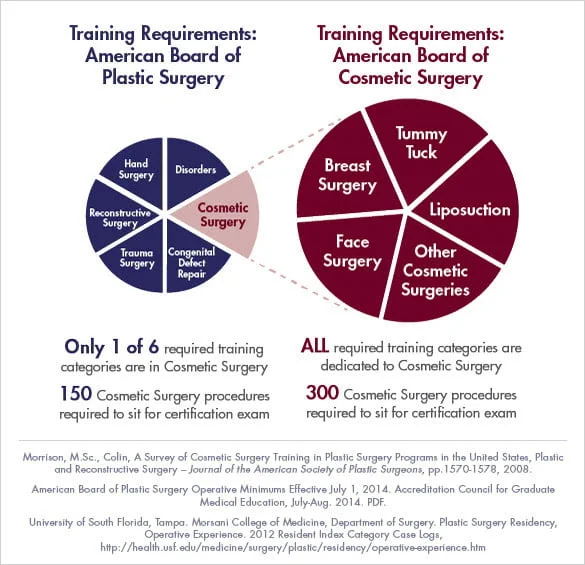
The residency training required to become a board-certified plastic surgeon may or may not include cosmetic surgery procedures training. But, in the United States there are currently no residency programs that are devoted exclusively to cosmetic surgery.
So, cosmetic surgeons obtain training and experience in cosmetic surgery after completing their plastic surgery residency. Typically, this is done by completing a post-residency fellowship training program in cosmetic surgery.
See the pie chart below, to see how cosmetic surgery is a “subset” of plastic surgery.
 Graphic Provided By: ABCS
Cosmetic Surgery is Focused on Appearance
The surgical procedures and techniques of cosmetic surgery are focused solely on enhancing a patient’s appearance – rather than restoring function or repairing a defect due to accident, injury, illness, or birth defect.
Cosmetic surgery is generally aimed at improving aesthetic appeal, symmetry, and proportion are the key goals. In some cases, this involves reversing the appearance of aging. Cosmetic surgery is “elective” – unlike most plastic surgeries which are medically indicated. Cosmetic surgery can be performed on all areas of the head, neck, and body to improve appearance.
Types of Plastic Surgery Procedures:
Types of Cosmetic Surgery Procedures:
Cosmetic Surgery | Birmingham, MI
Because any licensed physician can ‘legally’ perform cosmetic surgery, regardless of how much cosmetic surgery training or experience they have, it is extremely important to do your research when choosing a cosmetic surgeon. When selecting the most qualified surgeon for a specific cosmetic procedure, compare the doctors’ overall training, board-certification, years of experience, and proven results with regard to that specific cosmetic procedure.
Remember, a board-certified plastic surgeon like Dr. Ali has completed the training, residency and written and oral testing to ensure they are qualified to reconstruct the face and the body.
Dr. Ali is both a board-certified plastic surgeon, a member of the American Society of Plastic Surgeons, and a Fellow in the American College of Surgeons. He has performed more than 7,000 cosmetic and reconstructive surgeries.
Cosmetic Surgery | Birmingham, MI: 248-335-7200
.
Resources:
¹http://www.plasticsurgery.org/articles-and-galleries/history-of-plastic-surgery.html
Morrison, M.Sc., Colin, A Survey of Cosmetic Surgery Training in Plastic Surgery Programs in the United States, Plastic and Reconstructive Surgery – Journal of the American Society of Plastic Surgeons, pp.1570-1578, 2008.
Top Plastic Surgery Frequently Asked Questions
/in Plastic Surgery /by adminTop Patient Plastic Surgery FAQs
In order to help our plastic surgery patients achieve their goals, we encourage them to ask all the questions they need at the consultation, to ensure the procedure is a good fit. But at AMAE Plastic Surgery in Birmingham, MI, we often have patients who are unsure what questions to ask in their consultation. Dr. Ali and our expert staff have compiled a list of the top 10 frequently asked questions about plastic surgery to help patients prepare for their consultation appointment.
Here are some of the top most commonly asked plastic surgery questions, compiled by the experts at AMAE Plastic in Birmingham, MI.
Is plastic surgery covered by insurance?
In the vast majority of cases, plastic surgery is elective – rather than medically necessary – so insurance typically does not cover it. In some limited cases, however, insurance may cover plastic surgery for reconstructive purposes. Examples of insurance coverage for plastic surgery may be cases of medical necessity (e.g. eyelid surgery for obscured vision); or reconstruction after a patient has been injured in an accident or had a mastectomy due to breast cancer.
Who makes a good candidate for plastic surgery?
Patient who are in overall good health, do not have a history of smoking, and are not overweight are typically the ideal candidates for plastic surgery. Any patient who has a pre-existing condition such as high blood pressure, heart disease, or diabetes would not be considered a good candidate for plastic surgery – and need to speak to their primary physician to address their underlying health conditions. Patients who are ideal candidates for plastic surgery also keep expectations realistic. These patients are also forthcoming about past medical history, goals, and concerns. This level of transparency and detail helps the plastic surgeon and patient to have a positive plastic surgery experience.
Is plastic surgery risky?
Risk is associated with all surgical procedures. However, patients can rest assured that Board Certified plastic surgeon Dr. Ali is highly trained and exceptionally experienced – reducing the risk of side-effects or complications. Additionally, patient compliance with pre and post operative instructions is critical to ensure a safe outcome, avoid complications and ensure a rapid and positive recovery process.
At what age should I have plastic surgery?
There is no specific age that is the “correct” age for plastic surgery. Board certified plastic surgeon Dr. Ali has performed plastic surgery procedures on patients from infancy to people in their eighties. He has repaired cleft pallets on small children, performed nose jobs on teens to help them with self esteem, done eyelifts (blepharoplasty) on patients in their 80s – and everything in between.
There are some trends that are more common among younger patients, such as breast procedures, liposuction, and nose jobs. And more mature patients may be more likely to pursue facial procedures such as brow lifts, neck lifts, face lifts, or eyelid procedures. During consultation, Dr. Ali, the board certified plastic surgeon at AMAE Plastic Surgery in Birmingham, MI will ask questions relevant to your specific care, such as age, body type, and overall health status prior to moving forward with your plastic surgery.
Is board certification required to perform plastic surgery?
While surgeons may legally be able to perform plastic surgery procedures without a board certification, patients should understand the importance of working with a board certified plastic surgeon. Plastic surgery completed by a board certified plastic surgeon means the surgeon has proven their education, knowledge, ethics, experience, and competency in the field. While there is no legal prevention of a general surgeon performing a plastic surgery procedure, the board certification process helps assure patients that the surgeon performing their plastic surgery has undergone the necessary training and education and is an expert in the field of cosmetic surgery.
Where is plastic surgery performed?
Your safety during surgery depends on the quality of the operating facility. We perform most of our plastic procedures at new and state-of-the-art La Belle Surgery Center.
Plastic surgery must be completed in a safe, sterile, and quality operating facility. At AMAE Plastic Surgery in Birmingham, MI, procedures are performed in the modern La Belle outpatient surgical facility built by Dr. Ali in 2021 to service his patients with the highest quality of surgical care.
What preparations are required for plastic surgery?
Mental and physical preparation are necessary for a successful plastic surgery. Plastic surgery consultation is the first step in the preparatory process. At the consultation, Dr. Ali and the friendly and experienced staff at AMAE Plastic Surgery in Birmingham, MI will review all the critical details of the procedure, including the desired results. At the time of the plastic surgery consultation, patients will have the opportunity to view before and after photos of patients with similar features. Patients will also be able to ask all their questions to help them prepare for the plastic surgery process.
The consultation is also a critical time to review a patient’s health and medical history. Pre and post operative instructions will be given to the patient at this time. These will typically include stopping smoking, and avoiding certain medications and supplements, prior to the procedure. Patients also need to inform Dr. Ali if they are on any blood thinners, have any underlying medical conditions, or become ill prior to their plastic surgery procedure.
Are there non-invasive plastic surgery alternatives?
While surgery is invasive, AMAE Plastic Surgery and Med Spa in Birmingham, MI also offers a very wide array of cosmetic treatments that are non-invasive. These includes dermal fillers and radiofrequency (RF) and laser skin tightening procedures. Fillers can help plump lips and smooth wrinkles – and RF and laser treatments can tighten skin without surgery – to restore a youthful look without surgery.
Does plastic surgery require a hospital stay?
Plastic surgery is typically an outpatient procedure and patients go home the same day. However, in some cases for more extensive procedures – such as a tummy tuck or breast reconstruction – an overnight stay may be required. Dr. Ali will discuss this with you at your consultation.
AMAE Plastic Surgery | Birmingham, MI
If you are in Birmingham, MI and are interested in plastic surgery, AMAE Plastic Surgery has friendly staff on standby to help set up a consultation appointment. Dr. Ali is a board certified plastic surgeon who can help you achieve your aesthetic goals. He and his staff are compassionate, skilled, and ready to help you!
Take the next step towards your desired cosmetic results and contact us today for a plastic surgery consultation.
Plastic Surgery | Birmingham, MI: 248-335-7200
AMA Releases Report on What Makes a Good Plastic Surgeon
/in Plastic Surgery /by adminAmerican Medical Association Report on What Makes a Good Plastic Surgeon
Choosing a plastic surgeon is one of the most important decisions you will ever make. Whether you are considering plastic surgery for your face or body, it is a decision that will affect you for the rest of your life.
The American Medical Association (AMA) has published in its Journal of Ethics the character attributes that make a plastic surgeon great. This analysis goes beyond just experience and training and looks at the personal characteristics that make a plastic surgeon the among the best in their field.
If you are in Birmingham, MI and would like to connect with a skilled and highly qualified plastic surgeon, call Dr. Ali at AMAE Med Spa today, to set up a consultation.
Training and Education of a Plastic Surgeon
Training for a plastic surgeon should be focused on all areas of the body and have an emphasis on both plastic and reconstructive surgeries. A plastic surgeon must have an understanding of general surgery, along with detailed study of plastic and reconstructive surgery. Having a background or residency in general surgery, after and working with a highly experienced supervising surgeon helps prepare a plastic surgeon for performing in an operating room. It ensures the plastic surgeon is comfortable, confident, and fully prepared during a procedure prior to moving into a specialty field.
Plastic surgeons make valuable connections as they move through their residency. Receiving training in a specialized field of plastic surgery can help a plastic surgeon succeed. The plastic surgeon will have the opportunity to receive training through literature, simulation, cadavers, and tools. This allows the plastic surgeon to fully refine their skill set before performing surgery on patients..
Plastic surgery trends do constantly change, but a plastic surgeon needs to be skilled in breast procedures, facial procedures, reconstructive surgery, and upper and lower extremity surgeries.
A plastic surgeon must complete many years of training and education. But a great plastic surgeon also possesses certain personal characteristics that aid in their career. These characteristics include integrity, creativity, scientific curiosity, dedication, and compassion. Combining these characteristics with the proper training, education, and guidance can help a plastic surgeon build a successful career and boast patient satisfaction.
Integrity & Compassion are Important in a Plastic Surgeon
Integrity is something all people, a plastic surgeon included, typically begin to develop early in life. It can be influenced and altered based on family, lifestyle, friends, and colleagues. For a plastic surgeon, it can also be impacted by patient interactions.
Integrity helps a plastic surgeon make the best choices for their patients, with out regard for their own personal gain or benefits. A plastic surgeon with integrity does not pressure or influence a patient to undergo a procedure that is not right for them.
Closely linked to integrity are compassion and empathy. As a plastic surgeon interacts with their patients, they must have compassion and empathy to be able to understand their patients’ needs, concerns, and personal circumstances. Patients who are seeking plastic surgery come from all backgrounds and have a wide variety of reasons for pursuing an elective surgery. The ability to be sensitive and supporting is critical to the patient, and a plastic surgeon must be able to rise to this challenge for all patients they see. Compassion and empathy allow the plastic surgeon to help the patient choose the procedures that are best for them.
Humility is Valuable in a Plastic Surgeon
Humility is also an important characteristic in a plastic surgeon. Humility allows the plastic surgeon to recognize the need for continuing education and evolving clinical skill. Humility is what motivates a plastic surgeon to continue to strive to be better each day and to provide the best possible care to their patients. A plastic surgeon with humility will recognize that there is no such thing as perfection or a being perfect in their capabilities. Humility is important because it grounds a plastic surgeon, and motivates them to be in constant pursuit of excellence.
A Plastic Surgeon is Both Creative and Curious
A plastic surgeon is different than surgeons in most other specialties because they must constantly be creative. A plastic surgeon must approach a desired cosmetic result in many different ways to benefit their patients. Creativity and scientific curiosity keep a plastic surgeon finding new and innovative clinical tactics. Through the study of traditional approaches and the understanding of advancements in technology, a plastic surgeon who is creative and scientifically curious can change their patients’ lives.
Plastic Surgeon | Birmingham, MI
Dr. Ali at AMAE Plastic Surgery in Birmingham, MI maintains all the characteristics of an excellent plastic surgeon. Dr. Ali and the staff at AMAE Plastic Surgery care deeply for their patients and will work to find the most innovative, safe, and effective ways to achieve the patient’s cosmetic goals.
If you are in Birmingham, MI, contact AMAE Plastic Surgery today to set up a consultation with Board Certified Plastic Surgeon Dr. Ali
Plastic Surgeon | Birmingham, MI: 248-335-7200
CITATION:
AMA Journal of Ethics. Virtual Mentor. 2010;12(5):418-421.
https://journalofethics.ama-assn.org/article/character-and-plastic-surgeon/2010-05
DOI. 10.1001/virtualmentor.2010.12.5.oped1-1005.
Why You Should Choose a Board Certified Plastic Surgeon
/in Plastic Surgery /by adminWhy You Should Choose a Board Certified Plastic Surgeon
Making the choice to work with a Board Certified Plastic Surgeon is important for any patient who is considering plastic surgery! TV shows, TikTok videos, and news feeds are full of reports of ‘botched’ surgical procedures and undesired results from surgeons who are not board certified. This is why patients should always elect to work have cosmetic surgery only from a Board Certified Plastic Surgeon.
Of course, any surgical procedure carries some risks. But moving forward with plastic surgery from a Board Certified Plastic Surgeon, such as Dr. Ali at AMAE Plastic Surgery in Birmingham, MI ensures that patients are working with a qualified plastic surgeon who has completed the proper training and education to become a plastic surgeon.
In this article the cosmetic surgery experts at AMAE Plastic Surgery in Birmingham, MI help patients understand the benefits of working with a Board Certified Plastic Surgeon.
How A Board Certified Plastic Surgeon Gets Certified
The process for becoming a plastic surgeon takes around sixteen years of higher education. This includes training in specific areas, under the supervision of a qualified plastic surgeon. A Board Certified Plastic Surgeon is a plastic surgeon who has completed all required coursework and criteria to take the boards. And they have completed a written and oral examination. These examinations evaluate the physician’s skill and ethics. It also validates that the physician approaches a procedure safely and effectively.
Why You Should Choose a Board Certified Plastic Surgeon
It is important for patients to research their plastic surgeon before making any decisions about the appropriate surgeon to work with. Attaining the status of Board Certified Plastic Surgeon is not easily achieved. Board certification indicates that the plastic surgeon has achieved the highest level of skill, education, and training. This helps ensure that patients will get the results they desire, safely and effectively.
While most plastic surgery procedures are not medically necessary, they can have life altering outcomes if not performed by a skilled surgeon. But as the market for plastic surgery continues to thrive, some physicians are performing cosmetic surgeries without the required skillset or certification. A Board Certified Plastic Surgeon such as Dr. Ali at AMAE Plastic Surgery in Birmingham, MI offers patients peace of mind, knowing that they are working with a skilled physician.
A Board Certified Plastic Surgeon has the certification that confirms he has been extensively trained in facial and body surgical procedures and is equipped to handle emergency situations related to these procedures. It also confirms the surgeon can make technical and aesthetic decisions related to the procedures. The American Board of Plastic Surgery is the only American Board of Medical Specialties recognized to provide certification to surgeons for plastic surgeries.
Confirming Your Surgeon is Board Certified
As with any physician, patients should confirm the plastic surgeon they are potentially going to work with is a right fit by asking as many questions as possible. When interviewing potential plastic surgeons, it is important to verify specifically that the surgeon is a Board Certified Plastic Surgeon.
Additionally, to confirm the surgeon is a good fit, patients should also review before and after photos of past operations to confirm the physician’s aesthetic judgement matches their own. Asking questions about the location of procedures is also important, because Board Certified Plastic Surgeons are the only surgeons who can perform operations in state licensed or Medicare certified surgical centers.
Board Certified Plastic Surgeon | Birmingham, MI
If you are a patient in Birmingham, MI who is interested in a plastic surgery procedure, contact Dr. Ali at AMAE Plastic Surgery today to set up a consultation. Dr. Ali is a Board Certified Plastic Surgeon who works with patients to help them achieve their desired cosmetic results. Schedule a consultation with Board Certified Plastic Surgeon Dr. Ma Azhar Ali today – and take the first step toward achieving your aesthetic goals!
Board Certified Plastic Surgeon | Birmingham, MI: 248-335-7200
How to Get the Best Results with Facelift Surgery
/in Face Lift /by adminGetting the Best Results with Facelift Surgery–
Birmingham, MI board certified plastic surgeon Dr. Ali has successfully performed facelift surgery on thousands of thrilled men and women, who look love how they look younger and more attractive.
In this article he discusses some steps you can take to ensure you get the best results from your facelift surgery procedure.
Choosing a Facelift Surgeon
Choosing the right surgeon is the first step toward successful facelift surgery. A board certified plastic surgeon will have hundreds of hours of training and experience performing facelifts – and will be up on the latest procedures and best techniques.
Avoid doctors (or dentists!) who do facelifts “on the side” of their regular practice and are not board certified. Although they may be cheaper, remember that you get what you pay for.
An inexperienced or untrained surgeon can make mistakes that end up causing a stretched appearance, lumps or bumps, facial drooping, or uneven facial features. More seriously, nerve damage, trouble swallowing, and vocal or vision problems can result if your facelift surgeon is not board certified and highly experienced.
Facelift Surgery: Realistic Expectation
The best facelift candidates have realistic expectations. A good facelift should make you look like a natural, younger, more attractive version of yourself. However, a facelift is not a procedure that will make you look like someone else. There are, however, other surgical procedures that can more dramatically change your appearance – including nose jobs (rhinoplasty), eyelid lifts, and even cheek and jaw implants.
A facelift alone typically offers the most satisfying results for patients who wish to tighten lose, lax, or sagging skin. However, if you have specific features you wish to improve, a facelift can be combined with blepharoplasty (eyelid lift), rhinoplasty (facelift) or other plastic surgeries.
Dr. Ali will take the time to discuss your appearance goals – so you can make the right decision about which procedures are best for you.
Facelift Surgery: Following Instructions
The best results in facelift surgery are obtained by patients are committed to following their plastic surgeon’s pre- and post-operative instructions. Dr. Ali will provide you with detailed written instructions for both pre-operative and post-operative care.
Typically, should refrain from certain supplements, OTC medicines, and consuming alcohol, aspirin or any other non-steroidal anti-inflammatory drugs (such as ibuprofen) before their facelift – and for several weeks afterwards.
Patients who walk around three or four times a day after their facelift, boost circulation and prevent the development of blood clots in the legs. Not bending over, and not lifting heavy objects until the plastic surgeon allows it will also help the incisions to properly heal and will assist in keeping your results “in place.”
Of course, avoiding smoking before and after facelift surgery dramatically improves the body’s ability to heal quickly and properly. And taking your full course of prescribed antibiotics will prevent the risk of an infection after your facelift.
Sleeping position is also important post facelift surgery. Patients who sleep with their head elevated for about two to three weeks following a facelift will help prevent swelling.
Facelift Surgery – Birmingham, MI
If you are considering facelift surgery, Dr. Ali will offer you a discreet, no pressure consultation in his Birmingham, MI soffice to explain your options, answer all of your questions, and help you select the facelift procedure that is right for you.
Dr. Ali is a board certified plastic surgeon, and one of the Birmingham, MI area’s top facelift doctors. He has helped hundreds of men and women in Birmingham, MI and the greater Detroit area, and Southeast Michigan look younger and more attractive with facelift surgery! And, financing options are also available.
Birmingham, MI Facelift Consultation: 248-335-7200
What to Know Before Plastic Surgery
/in Breast Augmentation, Plastic Surgery, Rhinoplasty /by admin6 Tips to Get the Best Plastic Surgery Results
Considering plastic surgery is a big decision that can impact the rest of your life! So you need to be sure you’ve carefully thought it through. It’s important that you make your decision carefully, and select the best plastic surgeon – and don’t just settle on the plastic surgeon who offers rhinoplasty or breast augmentation for the lowest price.
In this article the plastic surgery experts at AMAE in the Detroit area share six tips to ensure that you get the best results from your plastic surgery procedure.
(1.) Choose a Board Certified Plastic Surgeon
“Plastic surgery is an art and requires expertise and specialized knowledge,” says Detroit area plastic surgeon Dr. Ali. “You want to be sure your surgeon can provide beautiful, natural looking results, so it’s important to choose one who has the experience you need. That means looking for one who is certified in plastic surgery because he or she will be committed to maintaining the highest standards in the field.”
(2.) Have Realistic Expectations for Plastic Surgery
It’s also important to have realistic expectations when undergoing plastic surgery. Dr. Ali sees many patients who bring along a photo of a favorite celebrity to show him the look they’d like. While Dr. Ali may be able to give you a nose that looks similar to Natalie Portman’s, or a bottom as full as Kim Kardashian’s, he won’t be able to transform you into someone you aren’t. Plastic surgery is meant to enhance your already natural beauty, and not transform you into a different person overnight.
“Patients must have a realistic idea of what plastic surgery can accomplish for them,” says Dr. Ali. “I can enhance your bustline, but I can’t make you into a supermodel. My goal is to help you become the best, most confident version of yourself.”
(3.) Do it for YOU!
Patients should never seek out surgery for anyone but themselves. If patients come to a plastic surgeon because someone else encouraged them or pressured them, the surgeon may decline to perform surgery. Plastic surgery should never be performed because you feel pressured to do so.
“Undergoing plastic surgery won’t automatically repair problems in your life,” says Dr. Ali. “If you and your boyfriend are in a rough patch, getting a liposuction isn’t going to repair that. Surgery can make you more confident and sure of yourself, but it can’t fix all the problems you may have.”
(4.) Be Honest with your Plastic Surgeon
Plastic surgery patients need to be completely honest with their surgeon about their medical history, smoking, alcohol and drug use (even prescription, herbal and over-the-counter medications). Failure to do so can result in complications and side effects. All nicotine products should be stopped at least a month prior to surgery (and for several weeks afterward) as nicotine is a vasoconstrictor that interferes with healing. Alcohol use should stop two weeks before surgery and for several weeks after surgery, as it can interfere with anesthesia and can cause excessive bleeding.
Patients should also be at or near their ideal weight and in good physical health. Underlying health issues such as obesity, high blood pressure, can increase the risks of plastic surgery.
“It’s important to be committed to maintaining a healthy lifestyle and weight,” says Dr. Ali. “Gaining or losing large amounts of weight after your procedure can alter your results. Before any body contouring surgery, such as a tummy tuck, it’s important to be at a stable weight that you are able to maintain.”
(5.) Follow Your Post Surgery Instructions & Recovery Plan
It is also important that you have a complete understanding of the recovery period following your surgery. Plastic surgery is elective, and may result in a body that make you more confident, but that won’t happen overnight.
“Plastic surgery is like any other surgery, and requires very real recovery time,” says Dr. Ali. “It’s important that you have a complete understanding of what is expected during recovery, and don’t try to rush through. Failing to follow your surgeons post-surgery guidelines can alter your results, and can lead to complications and additional pain and discomfort. Plastic surgery may be elective, but recovery from a procedure like a tummy tuck requires patience.”
(6.) You Get What You Pay for with Plastic Surgery
Dr. Ali also warns that when it comes to plastic surgery, you usually get what you pay for. Because these cosmetic procedures are very complex surgeries, he warns that you should never shop based on price alone.
“When it comes to your health, you shouldn’t bargain hunt,” says Dr. Ali. “If you needed heart surgery, chances are you’d want the most experienced surgeon performing it. It should be the same with plastic surgery. It is an art, and for the best results, choose someone based on their skills, not on their price.”
Plastic surgery can offer patients increased confidence and a renewed outlook on life. But it’s important to choose a well-qualified and skilled, board certified plastic surgeon like Doctor Ali – who has performed thousands of plastic surgeries – to ensure you get the best cosmetic results.
Top Detroit Area Plastic Surgery
If you have questions about what plastic surgery can do for you, please schedule a consultation with award-winning Detroit area plastic surgeon Dr. Ali.
The vast majority of people who choose to get plastic surgery say it has helped them feel more self-confident, feel better about their bodies, and give them a greater feeling of well-being.
Detroit area board certified plastic surgeon Doctor Ali offers a plastic surgery consultation to help you learn about your options and decide what plastic surgeries are a good option for you.
Detroit Area Plastic Surgery Consultation: 248-335-7200