Top Patient Plastic Surgery FAQs
In order to help our plastic surgery patients achieve their goals, we encourage them to ask all the questions they need at the consultation, to ensure the procedure is a good fit. But at AMAE Plastic Surgery in Birmingham, MI, we often have patients who are unsure what questions to ask in their consultation. Dr. Ali and our expert staff have compiled a list of the top 10 frequently asked questions about plastic surgery to help patients prepare for their consultation appointment.
Here are some of the top most commonly asked plastic surgery questions, compiled by the experts at AMAE Plastic in Birmingham, MI.
Is plastic surgery covered by insurance?
In the vast majority of cases, plastic surgery is elective – rather than medically necessary – so insurance typically does not cover it. In some limited cases, however, insurance may cover plastic surgery for reconstructive purposes. Examples of insurance coverage for plastic surgery may be cases of medical necessity (e.g. eyelid surgery for obscured vision); or reconstruction after a patient has been injured in an accident or had a mastectomy due to breast cancer.
Who makes a good candidate for plastic surgery?
Patient who are in overall good health, do not have a history of smoking, and are not overweight are typically the ideal candidates for plastic surgery. Any patient who has a pre-existing condition such as high blood pressure, heart disease, or diabetes would not be considered a good candidate for plastic surgery – and need to speak to their primary physician to address their underlying health conditions. Patients who are ideal candidates for plastic surgery also keep expectations realistic. These patients are also forthcoming about past medical history, goals, and concerns. This level of transparency and detail helps the plastic surgeon and patient to have a positive plastic surgery experience.
Is plastic surgery risky?
Risk is associated with all surgical procedures. However, patients can rest assured that Board Certified plastic surgeon Dr. Ali is highly trained and exceptionally experienced – reducing the risk of side-effects or complications. Additionally, patient compliance with pre and post operative instructions is critical to ensure a safe outcome, avoid complications and ensure a rapid and positive recovery process.
At what age should I have plastic surgery?
There is no specific age that is the “correct” age for plastic surgery. Board certified plastic surgeon Dr. Ali has performed plastic surgery procedures on patients from infancy to people in their eighties. He has repaired cleft pallets on small children, performed nose jobs on teens to help them with self esteem, done eyelifts (blepharoplasty) on patients in their 80s – and everything in between.
There are some trends that are more common among younger patients, such as breast procedures, liposuction, and nose jobs. And more mature patients may be more likely to pursue facial procedures such as brow lifts, neck lifts, face lifts, or eyelid procedures. During consultation, Dr. Ali, the board certified plastic surgeon at AMAE Plastic Surgery in Birmingham, MI will ask questions relevant to your specific care, such as age, body type, and overall health status prior to moving forward with your plastic surgery.
Is board certification required to perform plastic surgery?
While surgeons may legally be able to perform plastic surgery procedures without a board certification, patients should understand the importance of working with a board certified plastic surgeon. Plastic surgery completed by a board certified plastic surgeon means the surgeon has proven their education, knowledge, ethics, experience, and competency in the field. While there is no legal prevention of a general surgeon performing a plastic surgery procedure, the board certification process helps assure patients that the surgeon performing their plastic surgery has undergone the necessary training and education and is an expert in the field of cosmetic surgery.
Where is plastic surgery performed?
Your safety during surgery depends on the quality of the operating facility. We perform most of our plastic procedures at new and state-of-the-art La Belle Surgery Center.
Plastic surgery must be completed in a safe, sterile, and quality operating facility. At AMAE Plastic Surgery in Birmingham, MI, procedures are performed in the modern La Belle outpatient surgical facility built by Dr. Ali in 2021 to service his patients with the highest quality of surgical care.
What preparations are required for plastic surgery?
Mental and physical preparation are necessary for a successful plastic surgery. Plastic surgery consultation is the first step in the preparatory process. At the consultation, Dr. Ali and the friendly and experienced staff at AMAE Plastic Surgery in Birmingham, MI will review all the critical details of the procedure, including the desired results. At the time of the plastic surgery consultation, patients will have the opportunity to view before and after photos of patients with similar features. Patients will also be able to ask all their questions to help them prepare for the plastic surgery process.
The consultation is also a critical time to review a patient’s health and medical history. Pre and post operative instructions will be given to the patient at this time. These will typically include stopping smoking, and avoiding certain medications and supplements, prior to the procedure. Patients also need to inform Dr. Ali if they are on any blood thinners, have any underlying medical conditions, or become ill prior to their plastic surgery procedure.
Are there non-invasive plastic surgery alternatives?
While surgery is invasive, AMAE Plastic Surgery and Med Spa in Birmingham, MI also offers a very wide array of cosmetic treatments that are non-invasive. These includes dermal fillers and radiofrequency (RF) and laser skin tightening procedures. Fillers can help plump lips and smooth wrinkles – and RF and laser treatments can tighten skin without surgery – to restore a youthful look without surgery.
Does plastic surgery require a hospital stay?
Plastic surgery is typically an outpatient procedure and patients go home the same day. However, in some cases for more extensive procedures – such as a tummy tuck or breast reconstruction – an overnight stay may be required. Dr. Ali will discuss this with you at your consultation.
AMAE Plastic Surgery | Birmingham, MI
If you are in Birmingham, MI and are interested in plastic surgery, AMAE Plastic Surgery has friendly staff on standby to help set up a consultation appointment. Dr. Ali is a board certified plastic surgeon who can help you achieve your aesthetic goals. He and his staff are compassionate, skilled, and ready to help you!
Take the next step towards your desired cosmetic results and contact us today for a plastic surgery consultation.
Plastic Surgery | Birmingham, MI: 248-335-7200









Plastic Surgery: What is General Anesthesia Like?
/in Plastic Surgery /by adminWhat to Expect with General Anesthesia During Plastic Surgery
Thanks to advancements in minimally invasive surgical procedures, many times plastic surgery can be performed with only “local” anesthetic (numbing). But more extensive plastic surgery procedures, such as tummy tucks or full facelifts typically require generally anesthesia – the kind that “knocks you out” or “puts you under”.
If you have booked your plastic surgery – or are considering cosmetic surgery – you are probably quite excited about your results! But if you still have some questions or reservations about the general anesthesia you will be undergoing, you’re not alone. In fact, data recently compiled in a study performed by psychiatrists revealed that roughly 30% of plastic surgery patients were more afraid of the anesthesia than of the surgery itself.
It’s human nature to worry about something as new, different, and important as surgery. If you are feeling anxious about general anesthesia, knowing what to expect can help you feel more relaxed and comfortable. In this article the plastic surgery experts at AMAE Plastic Surgery in Birmingham, MI explain how general anesthesia works, what being “put under” feels like, and what to expect on the day of your procedure.
Is General Anesthesia Safe during Plastic Surgery?
Modern methods of general anesthesia are extremely safe when administered by a skilled, board-certified anesthesiologist. Studies have shown that there is only a 0.01% to 0.016% (one-tenth of one percent) chance of a fatal complication caused by anesthesia.
Certain known risk factors are usually to blame for these very rare anesthesia-related complications. Obesity, smoking, underlying illness, advanced age, poor overall health, and medication interactions are most often behind anesthesia complications. So, it is critical that patients are honest with their plastic surgeon about smoking, any medications they are taking, and/or any preexisting health issues.
What to Expect from General Anesthesia during Plastic Surgery
On your day of surgery, a caring nurse will assist you with any pre-op preparations before you are taken to the operating room. Next, both the anesthesiologist and the plastic surgeon will discuss the general anesthesia process with you before giving you the anesthesia injection, IV drip or gas.
Once the anesthesia hits your bloodstream, the effects kick in very quickly. The anesthesiologist may ask you to count backward from 100 to monitor how you are responding to the medication. Most people don’t even make it to 90!
Typically, patients do not remember anything (or feel anything) after that – from the time the general anesthetic is administered to waking up in the recovery room.
How General Anesthesia Works During Plastic Surgery
General anesthesia works on four different levels to affect the entire body and ensure that the patient does not feel a thing:
What Happens During General Anesthesia for Plastic Surgery
The anesthesiologist remains present for the entire time the patient is “asleep.” He or she will be constantly monitoring oxygen intake, vital signs, circulation, fluid loss, and degree of unconsciousness. This ensures that bodily function remains at stable, normal levels – and that the patient stays completely “under.” Knowing that a board certified anesthesiologist is by their side, monitoring their condition the entire time, often takes the worry away for many patients.
When the patient “wakes up” the period of time they were under general anesthesia is a ‘blank’. The last thing they usually remember is receiving the medication, and they don’t remember anything in between until they wake up in the recovery room.
Everyone reacts a bit differently to general anesthesia, upon waking up. Some patients simply feel “out of it” until they wake up completely. Others may feel emotional, loopy, or have slurred speech.
In fewer cases some people may have their inhibitions lowered and/or behave in an exaggerated manner that is normally uncharacteristic for them. This is perfectly normal and nothing to be embarrassed about. A quick YouTube or TikTok search returns many of videos patients exhibiting silly, out-of-character behavior as they recover from general anesthetic.
Recovery After General Anesthesia
Some patients may feel nauseous and/or dizzy for a little while, while others may shiver or feel cold for a few minutes or a couple hours.
For the first 24 hours after general anesthesia patients may continue to be sleepy, and their judgment, concentration and reflexes may still be affected. So, always have a responsible caregiver stay with you for at least a day after receiving general anesthesia.
Plastic Surgery | Birmingham, MI
While modern general anesthesia technology is extremely safe, you should always work with a board-certified plastic surgeon and a board certified anesthesiologist. Do not be shy or embarrassed to ask your plastic surgeon about the credentials of the anesthesiologist who will be administering your general anesthesia during your plastic surgery.
Dr. Ali is a skilled and experienced Birmingham, MI board certified plastic surgeon. He will answer all of your questions about general anesthesia if it is required for your plastic surgery procedure – and ensure you are paired with a fully qualified anesthesiologist or anesthetist.
Plastic Surgery | Birmingham, MI: 248-335-7200
Are Plastic Surgery & Cosmetic Surgery the Same?
/in Plastic Surgery, Reconstructive Surgery /by adminThe Difference Between Plastic Surgery & Cosmetic Surgery
Many people use the terms cosmetic surgery and plastic surgery to mean the same thing. And many plastic surgeons like Dr. Ali do focus their practice on cosmetic surgery. But while cosmetic surgery and plastic surgery are closely related specialties, they are technically not the same thing – and the terms cannot be used interchangeably.
In this article, the experts at AMAE Plastic Surgery in Birmingham, MI explain the difference between plastic surgery and cosmetic surgery.
Cosmetic Surgery is a “Sub-Set” of Plastic Surgery
Both cosmetic surgery and plastic surgery are medical specialties that are aimed at improving a patient’s body, but the training involved is actually different.
Plastic surgery is a surgical specialty dedicated to reconstruction of the face and body to repair defects caused by birth disorders, accidents, trauma, burns, and disease. For example, plastic surgeons repair cleft pallets in children, or reconstruct breasts after a mastectomy due to cancer. According to the American Society of Plastic Surgeons “plastic and reconstructive surgeons are one in the same.”¹
However, cosmetic surgeons, are trained plastic surgeons who then complete additional training to perform cosmetic surgery as well.
Plastic surgery training is completed by a physician through a post-graduate residency program via one of two routes:
“Board Certification” for a plastic surgeon is awarded by the American Board of Plastic Surgery after completing their residency and passing both a written and oral exam testing their procedural knowledge.
The residency training required to become a board-certified plastic surgeon may or may not include cosmetic surgery procedures training. But, in the United States there are currently no residency programs that are devoted exclusively to cosmetic surgery.
So, cosmetic surgeons obtain training and experience in cosmetic surgery after completing their plastic surgery residency. Typically, this is done by completing a post-residency fellowship training program in cosmetic surgery.
See the pie chart below, to see how cosmetic surgery is a “subset” of plastic surgery.
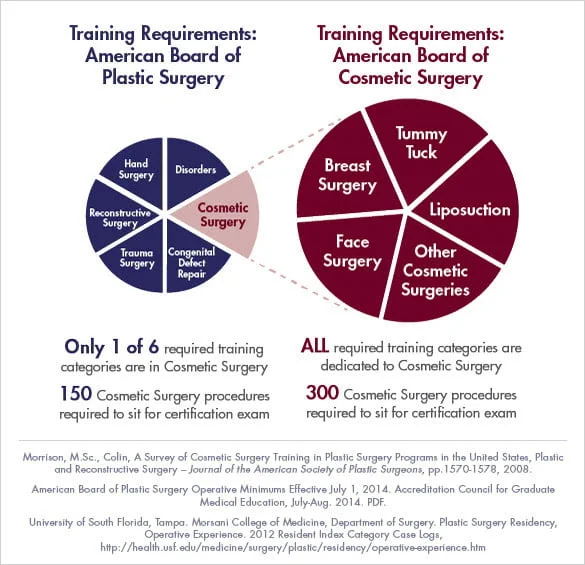 Graphic Provided By: ABCS
Cosmetic Surgery is Focused on Appearance
The surgical procedures and techniques of cosmetic surgery are focused solely on enhancing a patient’s appearance – rather than restoring function or repairing a defect due to accident, injury, illness, or birth defect.
Cosmetic surgery is generally aimed at improving aesthetic appeal, symmetry, and proportion are the key goals. In some cases, this involves reversing the appearance of aging. Cosmetic surgery is “elective” – unlike most plastic surgeries which are medically indicated. Cosmetic surgery can be performed on all areas of the head, neck, and body to improve appearance.
Types of Plastic Surgery Procedures:
Types of Cosmetic Surgery Procedures:
Cosmetic Surgery | Birmingham, MI
Because any licensed physician can ‘legally’ perform cosmetic surgery, regardless of how much cosmetic surgery training or experience they have, it is extremely important to do your research when choosing a cosmetic surgeon. When selecting the most qualified surgeon for a specific cosmetic procedure, compare the doctors’ overall training, board-certification, years of experience, and proven results with regard to that specific cosmetic procedure.
Remember, a board-certified plastic surgeon like Dr. Ali has completed the training, residency and written and oral testing to ensure they are qualified to reconstruct the face and the body.
Dr. Ali is both a board-certified plastic surgeon, a member of the American Society of Plastic Surgeons, and a Fellow in the American College of Surgeons. He has performed more than 7,000 cosmetic and reconstructive surgeries.
Cosmetic Surgery | Birmingham, MI: 248-335-7200
.
Resources:
¹http://www.plasticsurgery.org/articles-and-galleries/history-of-plastic-surgery.html
Morrison, M.Sc., Colin, A Survey of Cosmetic Surgery Training in Plastic Surgery Programs in the United States, Plastic and Reconstructive Surgery – Journal of the American Society of Plastic Surgeons, pp.1570-1578, 2008.
Top Plastic Surgery Frequently Asked Questions
/in Plastic Surgery /by adminTop Patient Plastic Surgery FAQs
In order to help our plastic surgery patients achieve their goals, we encourage them to ask all the questions they need at the consultation, to ensure the procedure is a good fit. But at AMAE Plastic Surgery in Birmingham, MI, we often have patients who are unsure what questions to ask in their consultation. Dr. Ali and our expert staff have compiled a list of the top 10 frequently asked questions about plastic surgery to help patients prepare for their consultation appointment.
Here are some of the top most commonly asked plastic surgery questions, compiled by the experts at AMAE Plastic in Birmingham, MI.
Is plastic surgery covered by insurance?
In the vast majority of cases, plastic surgery is elective – rather than medically necessary – so insurance typically does not cover it. In some limited cases, however, insurance may cover plastic surgery for reconstructive purposes. Examples of insurance coverage for plastic surgery may be cases of medical necessity (e.g. eyelid surgery for obscured vision); or reconstruction after a patient has been injured in an accident or had a mastectomy due to breast cancer.
Who makes a good candidate for plastic surgery?
Patient who are in overall good health, do not have a history of smoking, and are not overweight are typically the ideal candidates for plastic surgery. Any patient who has a pre-existing condition such as high blood pressure, heart disease, or diabetes would not be considered a good candidate for plastic surgery – and need to speak to their primary physician to address their underlying health conditions. Patients who are ideal candidates for plastic surgery also keep expectations realistic. These patients are also forthcoming about past medical history, goals, and concerns. This level of transparency and detail helps the plastic surgeon and patient to have a positive plastic surgery experience.
Is plastic surgery risky?
Risk is associated with all surgical procedures. However, patients can rest assured that Board Certified plastic surgeon Dr. Ali is highly trained and exceptionally experienced – reducing the risk of side-effects or complications. Additionally, patient compliance with pre and post operative instructions is critical to ensure a safe outcome, avoid complications and ensure a rapid and positive recovery process.
At what age should I have plastic surgery?
There is no specific age that is the “correct” age for plastic surgery. Board certified plastic surgeon Dr. Ali has performed plastic surgery procedures on patients from infancy to people in their eighties. He has repaired cleft pallets on small children, performed nose jobs on teens to help them with self esteem, done eyelifts (blepharoplasty) on patients in their 80s – and everything in between.
There are some trends that are more common among younger patients, such as breast procedures, liposuction, and nose jobs. And more mature patients may be more likely to pursue facial procedures such as brow lifts, neck lifts, face lifts, or eyelid procedures. During consultation, Dr. Ali, the board certified plastic surgeon at AMAE Plastic Surgery in Birmingham, MI will ask questions relevant to your specific care, such as age, body type, and overall health status prior to moving forward with your plastic surgery.
Is board certification required to perform plastic surgery?
While surgeons may legally be able to perform plastic surgery procedures without a board certification, patients should understand the importance of working with a board certified plastic surgeon. Plastic surgery completed by a board certified plastic surgeon means the surgeon has proven their education, knowledge, ethics, experience, and competency in the field. While there is no legal prevention of a general surgeon performing a plastic surgery procedure, the board certification process helps assure patients that the surgeon performing their plastic surgery has undergone the necessary training and education and is an expert in the field of cosmetic surgery.
Where is plastic surgery performed?
Your safety during surgery depends on the quality of the operating facility. We perform most of our plastic procedures at new and state-of-the-art La Belle Surgery Center.
Plastic surgery must be completed in a safe, sterile, and quality operating facility. At AMAE Plastic Surgery in Birmingham, MI, procedures are performed in the modern La Belle outpatient surgical facility built by Dr. Ali in 2021 to service his patients with the highest quality of surgical care.
What preparations are required for plastic surgery?
Mental and physical preparation are necessary for a successful plastic surgery. Plastic surgery consultation is the first step in the preparatory process. At the consultation, Dr. Ali and the friendly and experienced staff at AMAE Plastic Surgery in Birmingham, MI will review all the critical details of the procedure, including the desired results. At the time of the plastic surgery consultation, patients will have the opportunity to view before and after photos of patients with similar features. Patients will also be able to ask all their questions to help them prepare for the plastic surgery process.
The consultation is also a critical time to review a patient’s health and medical history. Pre and post operative instructions will be given to the patient at this time. These will typically include stopping smoking, and avoiding certain medications and supplements, prior to the procedure. Patients also need to inform Dr. Ali if they are on any blood thinners, have any underlying medical conditions, or become ill prior to their plastic surgery procedure.
Are there non-invasive plastic surgery alternatives?
While surgery is invasive, AMAE Plastic Surgery and Med Spa in Birmingham, MI also offers a very wide array of cosmetic treatments that are non-invasive. These includes dermal fillers and radiofrequency (RF) and laser skin tightening procedures. Fillers can help plump lips and smooth wrinkles – and RF and laser treatments can tighten skin without surgery – to restore a youthful look without surgery.
Does plastic surgery require a hospital stay?
Plastic surgery is typically an outpatient procedure and patients go home the same day. However, in some cases for more extensive procedures – such as a tummy tuck or breast reconstruction – an overnight stay may be required. Dr. Ali will discuss this with you at your consultation.
AMAE Plastic Surgery | Birmingham, MI
If you are in Birmingham, MI and are interested in plastic surgery, AMAE Plastic Surgery has friendly staff on standby to help set up a consultation appointment. Dr. Ali is a board certified plastic surgeon who can help you achieve your aesthetic goals. He and his staff are compassionate, skilled, and ready to help you!
Take the next step towards your desired cosmetic results and contact us today for a plastic surgery consultation.
Plastic Surgery | Birmingham, MI: 248-335-7200
AMA Releases Report on What Makes a Good Plastic Surgeon
/in Plastic Surgery /by adminAmerican Medical Association Report on What Makes a Good Plastic Surgeon
Choosing a plastic surgeon is one of the most important decisions you will ever make. Whether you are considering plastic surgery for your face or body, it is a decision that will affect you for the rest of your life.
The American Medical Association (AMA) has published in its Journal of Ethics the character attributes that make a plastic surgeon great. This analysis goes beyond just experience and training and looks at the personal characteristics that make a plastic surgeon the among the best in their field.
If you are in Birmingham, MI and would like to connect with a skilled and highly qualified plastic surgeon, call Dr. Ali at AMAE Med Spa today, to set up a consultation.
Training and Education of a Plastic Surgeon
Training for a plastic surgeon should be focused on all areas of the body and have an emphasis on both plastic and reconstructive surgeries. A plastic surgeon must have an understanding of general surgery, along with detailed study of plastic and reconstructive surgery. Having a background or residency in general surgery, after and working with a highly experienced supervising surgeon helps prepare a plastic surgeon for performing in an operating room. It ensures the plastic surgeon is comfortable, confident, and fully prepared during a procedure prior to moving into a specialty field.
Plastic surgeons make valuable connections as they move through their residency. Receiving training in a specialized field of plastic surgery can help a plastic surgeon succeed. The plastic surgeon will have the opportunity to receive training through literature, simulation, cadavers, and tools. This allows the plastic surgeon to fully refine their skill set before performing surgery on patients..
Plastic surgery trends do constantly change, but a plastic surgeon needs to be skilled in breast procedures, facial procedures, reconstructive surgery, and upper and lower extremity surgeries.
A plastic surgeon must complete many years of training and education. But a great plastic surgeon also possesses certain personal characteristics that aid in their career. These characteristics include integrity, creativity, scientific curiosity, dedication, and compassion. Combining these characteristics with the proper training, education, and guidance can help a plastic surgeon build a successful career and boast patient satisfaction.
Integrity & Compassion are Important in a Plastic Surgeon
Integrity is something all people, a plastic surgeon included, typically begin to develop early in life. It can be influenced and altered based on family, lifestyle, friends, and colleagues. For a plastic surgeon, it can also be impacted by patient interactions.
Integrity helps a plastic surgeon make the best choices for their patients, with out regard for their own personal gain or benefits. A plastic surgeon with integrity does not pressure or influence a patient to undergo a procedure that is not right for them.
Closely linked to integrity are compassion and empathy. As a plastic surgeon interacts with their patients, they must have compassion and empathy to be able to understand their patients’ needs, concerns, and personal circumstances. Patients who are seeking plastic surgery come from all backgrounds and have a wide variety of reasons for pursuing an elective surgery. The ability to be sensitive and supporting is critical to the patient, and a plastic surgeon must be able to rise to this challenge for all patients they see. Compassion and empathy allow the plastic surgeon to help the patient choose the procedures that are best for them.
Humility is Valuable in a Plastic Surgeon
Humility is also an important characteristic in a plastic surgeon. Humility allows the plastic surgeon to recognize the need for continuing education and evolving clinical skill. Humility is what motivates a plastic surgeon to continue to strive to be better each day and to provide the best possible care to their patients. A plastic surgeon with humility will recognize that there is no such thing as perfection or a being perfect in their capabilities. Humility is important because it grounds a plastic surgeon, and motivates them to be in constant pursuit of excellence.
A Plastic Surgeon is Both Creative and Curious
A plastic surgeon is different than surgeons in most other specialties because they must constantly be creative. A plastic surgeon must approach a desired cosmetic result in many different ways to benefit their patients. Creativity and scientific curiosity keep a plastic surgeon finding new and innovative clinical tactics. Through the study of traditional approaches and the understanding of advancements in technology, a plastic surgeon who is creative and scientifically curious can change their patients’ lives.
Plastic Surgeon | Birmingham, MI
Dr. Ali at AMAE Plastic Surgery in Birmingham, MI maintains all the characteristics of an excellent plastic surgeon. Dr. Ali and the staff at AMAE Plastic Surgery care deeply for their patients and will work to find the most innovative, safe, and effective ways to achieve the patient’s cosmetic goals.
If you are in Birmingham, MI, contact AMAE Plastic Surgery today to set up a consultation with Board Certified Plastic Surgeon Dr. Ali
Plastic Surgeon | Birmingham, MI: 248-335-7200
CITATION:
AMA Journal of Ethics. Virtual Mentor. 2010;12(5):418-421.
https://journalofethics.ama-assn.org/article/character-and-plastic-surgeon/2010-05
DOI. 10.1001/virtualmentor.2010.12.5.oped1-1005.
Why You Should Choose a Board Certified Plastic Surgeon
/in Plastic Surgery /by adminWhy You Should Choose a Board Certified Plastic Surgeon
Making the choice to work with a Board Certified Plastic Surgeon is important for any patient who is considering plastic surgery! TV shows, TikTok videos, and news feeds are full of reports of ‘botched’ surgical procedures and undesired results from surgeons who are not board certified. This is why patients should always elect to work have cosmetic surgery only from a Board Certified Plastic Surgeon.
Of course, any surgical procedure carries some risks. But moving forward with plastic surgery from a Board Certified Plastic Surgeon, such as Dr. Ali at AMAE Plastic Surgery in Birmingham, MI ensures that patients are working with a qualified plastic surgeon who has completed the proper training and education to become a plastic surgeon.
In this article the cosmetic surgery experts at AMAE Plastic Surgery in Birmingham, MI help patients understand the benefits of working with a Board Certified Plastic Surgeon.
How A Board Certified Plastic Surgeon Gets Certified
The process for becoming a plastic surgeon takes around sixteen years of higher education. This includes training in specific areas, under the supervision of a qualified plastic surgeon. A Board Certified Plastic Surgeon is a plastic surgeon who has completed all required coursework and criteria to take the boards. And they have completed a written and oral examination. These examinations evaluate the physician’s skill and ethics. It also validates that the physician approaches a procedure safely and effectively.
Why You Should Choose a Board Certified Plastic Surgeon
It is important for patients to research their plastic surgeon before making any decisions about the appropriate surgeon to work with. Attaining the status of Board Certified Plastic Surgeon is not easily achieved. Board certification indicates that the plastic surgeon has achieved the highest level of skill, education, and training. This helps ensure that patients will get the results they desire, safely and effectively.
While most plastic surgery procedures are not medically necessary, they can have life altering outcomes if not performed by a skilled surgeon. But as the market for plastic surgery continues to thrive, some physicians are performing cosmetic surgeries without the required skillset or certification. A Board Certified Plastic Surgeon such as Dr. Ali at AMAE Plastic Surgery in Birmingham, MI offers patients peace of mind, knowing that they are working with a skilled physician.
A Board Certified Plastic Surgeon has the certification that confirms he has been extensively trained in facial and body surgical procedures and is equipped to handle emergency situations related to these procedures. It also confirms the surgeon can make technical and aesthetic decisions related to the procedures. The American Board of Plastic Surgery is the only American Board of Medical Specialties recognized to provide certification to surgeons for plastic surgeries.
Confirming Your Surgeon is Board Certified
As with any physician, patients should confirm the plastic surgeon they are potentially going to work with is a right fit by asking as many questions as possible. When interviewing potential plastic surgeons, it is important to verify specifically that the surgeon is a Board Certified Plastic Surgeon.
Additionally, to confirm the surgeon is a good fit, patients should also review before and after photos of past operations to confirm the physician’s aesthetic judgement matches their own. Asking questions about the location of procedures is also important, because Board Certified Plastic Surgeons are the only surgeons who can perform operations in state licensed or Medicare certified surgical centers.
Board Certified Plastic Surgeon | Birmingham, MI
If you are a patient in Birmingham, MI who is interested in a plastic surgery procedure, contact Dr. Ali at AMAE Plastic Surgery today to set up a consultation. Dr. Ali is a Board Certified Plastic Surgeon who works with patients to help them achieve their desired cosmetic results. Schedule a consultation with Board Certified Plastic Surgeon Dr. Ma Azhar Ali today – and take the first step toward achieving your aesthetic goals!
Board Certified Plastic Surgeon | Birmingham, MI: 248-335-7200
How to Get the Best Results with Facelift Surgery
/in Face Lift /by adminGetting the Best Results with Facelift Surgery–
Birmingham, MI board certified plastic surgeon Dr. Ali has successfully performed facelift surgery on thousands of thrilled men and women, who look love how they look younger and more attractive.
In this article he discusses some steps you can take to ensure you get the best results from your facelift surgery procedure.
Choosing a Facelift Surgeon
Choosing the right surgeon is the first step toward successful facelift surgery. A board certified plastic surgeon will have hundreds of hours of training and experience performing facelifts – and will be up on the latest procedures and best techniques.
Avoid doctors (or dentists!) who do facelifts “on the side” of their regular practice and are not board certified. Although they may be cheaper, remember that you get what you pay for.
An inexperienced or untrained surgeon can make mistakes that end up causing a stretched appearance, lumps or bumps, facial drooping, or uneven facial features. More seriously, nerve damage, trouble swallowing, and vocal or vision problems can result if your facelift surgeon is not board certified and highly experienced.
Facelift Surgery: Realistic Expectation
The best facelift candidates have realistic expectations. A good facelift should make you look like a natural, younger, more attractive version of yourself. However, a facelift is not a procedure that will make you look like someone else. There are, however, other surgical procedures that can more dramatically change your appearance – including nose jobs (rhinoplasty), eyelid lifts, and even cheek and jaw implants.
A facelift alone typically offers the most satisfying results for patients who wish to tighten lose, lax, or sagging skin. However, if you have specific features you wish to improve, a facelift can be combined with blepharoplasty (eyelid lift), rhinoplasty (facelift) or other plastic surgeries.
Dr. Ali will take the time to discuss your appearance goals – so you can make the right decision about which procedures are best for you.
Facelift Surgery: Following Instructions
The best results in facelift surgery are obtained by patients are committed to following their plastic surgeon’s pre- and post-operative instructions. Dr. Ali will provide you with detailed written instructions for both pre-operative and post-operative care.
Typically, should refrain from certain supplements, OTC medicines, and consuming alcohol, aspirin or any other non-steroidal anti-inflammatory drugs (such as ibuprofen) before their facelift – and for several weeks afterwards.
Patients who walk around three or four times a day after their facelift, boost circulation and prevent the development of blood clots in the legs. Not bending over, and not lifting heavy objects until the plastic surgeon allows it will also help the incisions to properly heal and will assist in keeping your results “in place.”
Of course, avoiding smoking before and after facelift surgery dramatically improves the body’s ability to heal quickly and properly. And taking your full course of prescribed antibiotics will prevent the risk of an infection after your facelift.
Sleeping position is also important post facelift surgery. Patients who sleep with their head elevated for about two to three weeks following a facelift will help prevent swelling.
Facelift Surgery – Birmingham, MI
If you are considering facelift surgery, Dr. Ali will offer you a discreet, no pressure consultation in his Birmingham, MI soffice to explain your options, answer all of your questions, and help you select the facelift procedure that is right for you.
Dr. Ali is a board certified plastic surgeon, and one of the Birmingham, MI area’s top facelift doctors. He has helped hundreds of men and women in Birmingham, MI and the greater Detroit area, and Southeast Michigan look younger and more attractive with facelift surgery! And, financing options are also available.
Birmingham, MI Facelift Consultation: 248-335-7200
What to Know Before Plastic Surgery
/in Breast Augmentation, Plastic Surgery, Rhinoplasty /by admin6 Tips to Get the Best Plastic Surgery Results
Considering plastic surgery is a big decision that can impact the rest of your life! So you need to be sure you’ve carefully thought it through. It’s important that you make your decision carefully, and select the best plastic surgeon – and don’t just settle on the plastic surgeon who offers rhinoplasty or breast augmentation for the lowest price.
In this article the plastic surgery experts at AMAE in the Detroit area share six tips to ensure that you get the best results from your plastic surgery procedure.
(1.) Choose a Board Certified Plastic Surgeon
“Plastic surgery is an art and requires expertise and specialized knowledge,” says Detroit area plastic surgeon Dr. Ali. “You want to be sure your surgeon can provide beautiful, natural looking results, so it’s important to choose one who has the experience you need. That means looking for one who is certified in plastic surgery because he or she will be committed to maintaining the highest standards in the field.”
(2.) Have Realistic Expectations for Plastic Surgery
It’s also important to have realistic expectations when undergoing plastic surgery. Dr. Ali sees many patients who bring along a photo of a favorite celebrity to show him the look they’d like. While Dr. Ali may be able to give you a nose that looks similar to Natalie Portman’s, or a bottom as full as Kim Kardashian’s, he won’t be able to transform you into someone you aren’t. Plastic surgery is meant to enhance your already natural beauty, and not transform you into a different person overnight.
“Patients must have a realistic idea of what plastic surgery can accomplish for them,” says Dr. Ali. “I can enhance your bustline, but I can’t make you into a supermodel. My goal is to help you become the best, most confident version of yourself.”
(3.) Do it for YOU!
Patients should never seek out surgery for anyone but themselves. If patients come to a plastic surgeon because someone else encouraged them or pressured them, the surgeon may decline to perform surgery. Plastic surgery should never be performed because you feel pressured to do so.
“Undergoing plastic surgery won’t automatically repair problems in your life,” says Dr. Ali. “If you and your boyfriend are in a rough patch, getting a liposuction isn’t going to repair that. Surgery can make you more confident and sure of yourself, but it can’t fix all the problems you may have.”
(4.) Be Honest with your Plastic Surgeon
Plastic surgery patients need to be completely honest with their surgeon about their medical history, smoking, alcohol and drug use (even prescription, herbal and over-the-counter medications). Failure to do so can result in complications and side effects. All nicotine products should be stopped at least a month prior to surgery (and for several weeks afterward) as nicotine is a vasoconstrictor that interferes with healing. Alcohol use should stop two weeks before surgery and for several weeks after surgery, as it can interfere with anesthesia and can cause excessive bleeding.
Patients should also be at or near their ideal weight and in good physical health. Underlying health issues such as obesity, high blood pressure, can increase the risks of plastic surgery.
“It’s important to be committed to maintaining a healthy lifestyle and weight,” says Dr. Ali. “Gaining or losing large amounts of weight after your procedure can alter your results. Before any body contouring surgery, such as a tummy tuck, it’s important to be at a stable weight that you are able to maintain.”
(5.) Follow Your Post Surgery Instructions & Recovery Plan
It is also important that you have a complete understanding of the recovery period following your surgery. Plastic surgery is elective, and may result in a body that make you more confident, but that won’t happen overnight.
“Plastic surgery is like any other surgery, and requires very real recovery time,” says Dr. Ali. “It’s important that you have a complete understanding of what is expected during recovery, and don’t try to rush through. Failing to follow your surgeons post-surgery guidelines can alter your results, and can lead to complications and additional pain and discomfort. Plastic surgery may be elective, but recovery from a procedure like a tummy tuck requires patience.”
(6.) You Get What You Pay for with Plastic Surgery
Dr. Ali also warns that when it comes to plastic surgery, you usually get what you pay for. Because these cosmetic procedures are very complex surgeries, he warns that you should never shop based on price alone.
“When it comes to your health, you shouldn’t bargain hunt,” says Dr. Ali. “If you needed heart surgery, chances are you’d want the most experienced surgeon performing it. It should be the same with plastic surgery. It is an art, and for the best results, choose someone based on their skills, not on their price.”
Plastic surgery can offer patients increased confidence and a renewed outlook on life. But it’s important to choose a well-qualified and skilled, board certified plastic surgeon like Doctor Ali – who has performed thousands of plastic surgeries – to ensure you get the best cosmetic results.
Top Detroit Area Plastic Surgery
If you have questions about what plastic surgery can do for you, please schedule a consultation with award-winning Detroit area plastic surgeon Dr. Ali.
The vast majority of people who choose to get plastic surgery say it has helped them feel more self-confident, feel better about their bodies, and give them a greater feeling of well-being.
Detroit area board certified plastic surgeon Doctor Ali offers a plastic surgery consultation to help you learn about your options and decide what plastic surgeries are a good option for you.
Detroit Area Plastic Surgery Consultation: 248-335-7200
Comparing Treatments for Painful Sex
/in Hormone Replacement, Vaginal Rejuvenation /by adminWhat is the Best Treatment for Painful Sex?
After menopause, more than 50% of women report having painful sex. Sadly, this condition – known as genitourinary syndrome of menopause or “GSM” – is one that women often suffer with in silence, because they are two embarrassed to seek help – or they think pain during intercourse is a ‘normal’ part of aging. But painful intercourse does NOT have to be a part of aging that women must accept! There are new, state-of-the-art treatments that can eliminate painful sex.
In this article we compare the newest, most innovative and effective treatments for painful sex.
Treatments for Painful Sex: Hormones
Estrogen is necessary for maintaining thick, healthy, elastic, lubricated vaginal walls and tissues. But the hormone decline of menopause can wreak havoc on a woman’s sex life by causing thinning and laxity of the vaginal walls – resulting in: pain during intercourse; decreased vaginal lubrication; vaginal itching, pain and dryness; reduced sexual sensation; vaginal laxity; and, less frequent or less intense orgasms.
In the past, doctors treated women who suffered from painful sex with either vaginal or oral hormone replacement therapy (HRT). But estrogen that is delivered using a cream, a “ring,” or a vaginally inserted tablet is not only messy and inconvenient – but must be continued daily or multiple times weekly. Previously, if vaginal estrogen insertion treatment was not effective to remedy painful sex, women were then typically put on oral Estrogen hormone pills. But oral hormone therapy offers the disadvantage of a roller coaster effect with hormone surges in the morning that then wear off completely by the end of the day. And, patients also have to remember to take pills every day at the same time.
However a new form of HRT – bioidentical subcutaneous pellets – more naturally and effectively addresses the underlying causes of pain during intercourse. Many physicians believe that this is most effective, safest, and most natural method of replacing female hormones. Time-released, subdermal (under the skin) hormone pellets deliver missing hormones consistently and evenly – when they are needed – just like the body itself.
A single hormone pellet implant consistently releases low doses of hormones for several months with just one single insertion. And, unlike the synthetic hormones that are created in a laboratory, bioidentical hormone replacement pellets are derived from 100% natural plant-based sources – making them safer, and more easily and effectively used by the female body.
Treatments for Painful Sex: Viveve® Vaginal Rejuvenation
Viveve® Vaginal Rejuvenation treatment for painful sex uses radio-frequency heat energy with integrated cooling technology to help restore the vaginal tissue naturally. Collagen is the substance in the skin (including the vagina) that is responsible for skin strength and elasticity. Radiofrequency treatments stimulate the body’s own collagen production in the vagina – and the cooling technology component ensures that the procedure is more comfortable than other types of vaginal rejuvenation treatments.
This natural, safe, non-surgical technology improves the vaginal tissues’ texture, lubrication, suppleness, tightness and elasticity without hormones and without surgery. In multiple clinical studies that were approved by the FDA, Viveve® has been clinically proven to be a safe and effective treatment for painful sex – without reported side effects or complications.
Viveve® is the ONLY vaginal rejuvenation that only requires a single treatment to treat painful sex. Additionally, unlike laser vaginal treatments, Viveve® has patented cryo-cooling technology incorporated into the treatment to offset the heat of the treatment, for a relaxing and pain free experience.
Why Viveve RF is Better Than Lasers for Painful Sex
Laser vaginal rejuvenation treatments for painful sex uses “ablation” in which the laser creates microscopic incisions or “cuts” in the vaginal tissue. The body’s healing response to these tiny cuts, stimulates collagen production, thickening the vaginal skin over time – as well as increasing lubrication and elasticity. This makes them much more uncomfortable than pain-free Viveve® radiofrequency vaginal rejuvenation
Additionally, all laser treatments on the market for painful sex (DiVa, MonaLisa Touch, FemiLift ) currently require 3 treatments, spaced 4 to 6 weeks apart. However, Viveve® radiofrequency vaginal rejuvenation only requires a SINGLE treatment to eliminate pain during intercourse.
Painful Sex Treatments – Oakland County
Dr. Ali has helped hundreds of women in Oakland County and across the Detroit area stop bladder leaks & improve sexual intimacy with bioidentical hormone replacement therapy (BHRT) and/or just a single 30 minute Viveve® vaginal rejuvenation treatment!
Both painful sex treatments are affordable, painless, procedures performed in our Oakland County medical office. There is no downtime, and you will begin to notice vaginal improvement within just a few weeks.
Call us for a discreet, confidential vaginal rejuvenation consultation and see if BHRT or Viveve® is right for you!
Oakland County Painful Sex Treatments: 248-335-7200
Vaginal Rejuvenation in Younger Women after Childbirth
/in Vaginal Rejuvenation, Vaginal Tightening /by adminClinical Studies Prove Effectiveness of Vaginal Rejuvenation in Younger Women after Childbirth
Due to a number of causes – from childbirth and aging, to reduced hormone production, to genetics or even trauma – the vagina can become loose and lax over time. The result is often stress urinary incontinence (bladder leaks), itching, burning and dryness, decreased sensation during sex, and painful intercourse.
Previously, these conditions could only be treated with ongoing hormone therapy, or painful surgery with a long recovery period. Recently, however, surgical procedures, medications and topical creams have been replaced with new, noninvasive, energy-based systems of vaginal rejuvenation called Viveve® .
Viveve® vaginal rejuvenation is a relatively new, non-invasive, non-surgical treatment that is now available for women seeking to revitalize and strengthen the elasticity of the vaginal walls and improve the natural lubrication of their vaginal tissue. The Viveve® vaginal rejuvenation treatment uses a proprietary form of radiofrequency based energy to remodel collagen and restore the tissue in the vaginal.
After just a single Viveve® vaginal rejuvenation treatment in our Detroit area office, patients typically report decreased bladder leaks, improved vaginal tightness and lubrication, increased sexual sensation, and elimination of pain during intercourse. But don’t just take our word for it! There is also plenty of clinical research supporting the effectiveness of Viveve® vaginal rejuvenation.
Vaginal Rejuvenation & Childbirth
One of the most common causes of a loose, lax, thinned, or dry vagina is vaginal childbirth. The stretching and related trauma of delivering a child through the vaginal canal often leads to strected or thinned vaginal tissue.
Two clinical reports have been published demonstrating the effectiveness of Viveve® vaginal rejuvenation device for treating vaginal laxity following vaginal child birth in women before menopause.
Viveve® Vaginal Rejuvenation Study #1
A pilot clinical study was conducted on 24 women who had delivered children vaginally. The women were between the ages of 25 and 44 years. Reverse gradient radiofrequency energy was delivered through the “vaginal mucosa” (tissue).
Results from the study showed that after only 1 month after vaginal radiofrequency treatment, 67% of the women reported that vaginal tightness had already significantly improved. By 6 months almost 90% of the patients reported a substantial improvement in vaginal tightness.
Additionally, the women also reported that their sexual function had improved. And absolutely no adverse effects or complications were reported during the vaginal rejuvenation study.
Viveve® Vaginal Rejuvenation Study #2
In another clinical study, 30 pre-menopausal women between the ages of 21 and 52 were treated with a single 30-min office treatment using Viveve® radiofrequency Vaginal Rejuvenation. 100% of the patients reported a significant improvement in sexual function at 6 months after treatment, and all of the women also reported a decrease in discomfort and/or pain during sex.
Every participant in the clinical study also reported a decrease vaginal laxity (looseness) within the first month after the treatment, as well as sustained vaginal tightening through 12 months.
Board certified plastic surgeon Doctor Ali stays on the cutting edge of the latest prevention, treatment, and management strategies for women’s vaginal health and wellbeing. Viveve® radiofrequency Vaginal Rejuvenation treatment enables women and their physicians to have another treatment option to consider, while weighing the associated risks and benefits.
Top Detroit Area Vaginal Rejuvenation Treatments
Dr. Ali has helped hundreds of women in the Detroit area stop bladder leaks & improve sexual intimacy with just a single 30 minute Viveve® vaginal rejuvenation treatment.
Viveve® is a fast, affordable, and painless procedure performed in our Birmingham, MI (Detroit area) medical office. There is no downtime, and you will begin to notice vaginal improvement within just a few weeks.
Call us for a discreet, confidential vaginal rejuvenation consultation and see if Viveve® vaginal rejuvenation is right for you!
Detroit Area Vaginal Rejuvenation Consultation: 248-335-7200
How to Improve Healing After Liposuction (Part 1)
/in Liposuction /by admin12 Steps to Faster Healing & Less Downtime After Liposuction
Liposuction is a quite commonly performed permanent fat loss procedure – with more than 250,000 lipo procedures performed in the United States every year. The reason for liposuction’s popularity is the amazing body contouring that takes place – giving people the body they haven’t been able to attain with diet or exercise.
And, while the downtime with liposuction is relatively short (and the pain is relatively minimal), lipo is a surgical procedure that does require time for healing and recovery. As with any surgery there will be some bruising and discomfort for a number of days or a few weeks afterward. And, liposuction swelling can last from 6 weeks to 6 months before fully absorbed.
Patients should never try to “rush” recovery, but there are certain steps one can take to help the body’s natural healing process along. In this article, board-certified Troy, MI area plastic surgeon Dr. Ali explains some steps you can take to help minimize soreness and accelerate the healing of bruising and swelling after liposuction.
#1. Follow the Liposuction Surgeon’s After Care Instructions
This is the most important step to proper and rapid healing. Your surgeon’s advice may be different than general information found on the Internet.
#2. Wear Your Compression Garment After Liposuction as Instructed
You will be provided with a compression garment and instructions on when to wear it. Your compression garment will help reduce swelling, help the skin contract back into place, minimize discomfort and reduce the likelihood of developing blood clots. Always wear it as instructed!
#3. Avoid Smoking After Liposuction
Smoking interferes with the body’s healing mechanisms and can lead to a slow recovery as well as increase the risks of complications. Smoking also compromises a patient’s immune system which increases the risk of infection at the incision site.
Even smoking just a single cigarette decreases the body’s ability to deliver the nutrients that are necessary for healing after surgery.
#4. Avoid Alcohol After Liposuction
Alcohol, even in moderation, can also interfere with the body’s ability to reduce the inflammation.
Alcohol is also a natural blood thinner, so it can lead to increased bleeding and swelling during surgery – and in the days and weeks following liposuction. And excessive bruising and increased swelling cause more pain and delay healing time.
#5. Increase Protein, Fruits and Vegetables After Liposuction
Proper healing requires good nutrition – especially sufficient protein intake. Fish such as salmon, chicken, nuts, and beans are all excellent sources of protein. Apples, berries, bananas, and an assortment of colorful vegetables will also supply the body with the nutrients it needs to heal.
Salt intake should also be reduce after liposuction – as salt encourages water retention which aggravates swelling. And more swelling means both more pain and a longer time until you see results! This also means NO sports drinks (like Gatorade), vegetable juice (like V8), or other high salt-content drinks.
#6. Supplements May Help Heal After Liposuction
Starting Arnica supplements before liposuction and continuing it for several weeks afterwards can aid in healing.
After lipo surgery Bromelain supplements may also be beneficial. Clinical studies have shown that Bromelain may reduce swelling, bruising, healing time, and pain after surgery. One 200-milligram bromelain tablets taken twice a day is the typically recommended dose for post surgical patients. But ask your liposuction team if and when Bromelain is right for you. Bromelain generally works best when taken on an empty stomach.
Turmeric supplements – or use of the spice turmeric in your food – may also assist in reducing inflammation. 400 to 600 milligrams (mg) of turmeric up to three times per day is the generally suggested dose for inflammation relief.
But always heck with your surgeon to ensure that these – or any post-surgery supplements you wish to take – are safe for you.
CLICK HERE FOR MORE TIPS ON SPEEDING UP LIPOSUCTION HEALING
Liposuction | Troy, MI Area
Liposuction can be truly life-changing for most patients. And our Troy, MI area patients universally agree that the discomfort and limitations of recovery from lipo surgery are more than worth it to get the body they have always wanted.
Following these simple steps can help you minimize discomfort and accelerate healing so that you see a slimmer, more contoured body as soon as possible after lipo.
If you live in the greater Troy, MI area and would like to get the body you have always wanted, schedule a liposuction consultation at AMAE Plastic Surgery today!
Liposuction | Troy, MI Area: 248-335-7200